

The price of multilayer ceramic capacitors (MLCCs), often jokingly referred to as the “rice” of information technology (IT) equipment, is soaring. This price surge is primarily due to a prolonged supply shortage of MLCCs caused by the investment boom in artificial intelligence (AI) infrastructure.
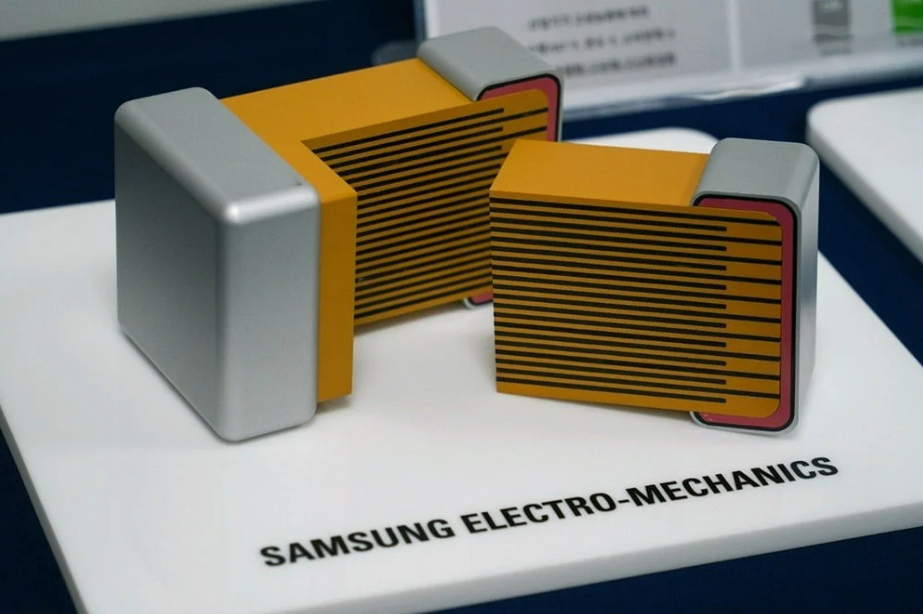
The world’s three largest MLCC manufacturers—Samsung Electro-Mechanics, Murata Manufacturing, and Taiyo Yuden—have recently raised prices simultaneously and appear to be accelerating factory investments to increase supply. Meanwhile, some emerging Chinese companies are seizing the opportunity to dominate the low-to-mid-priced general-purpose MLCC market.
The AI boom drives up MLCC prices
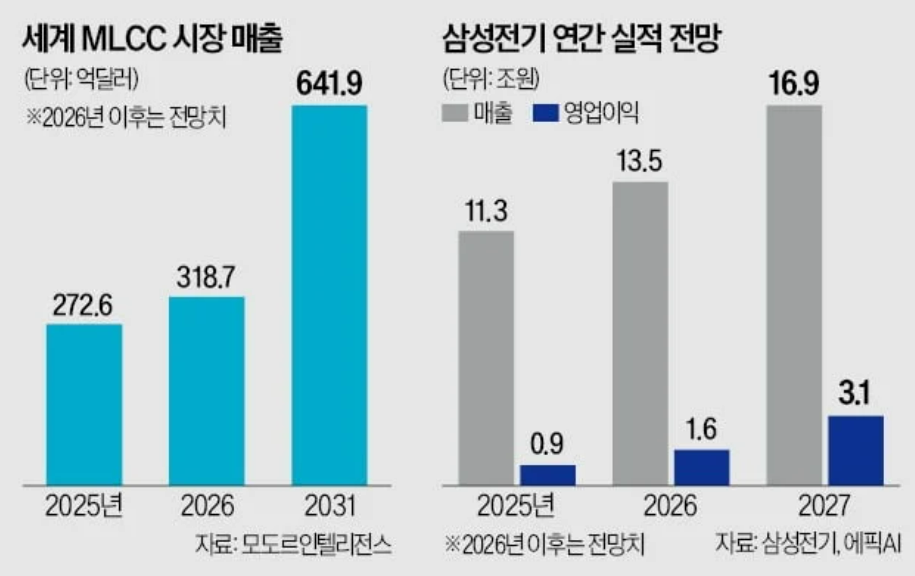
According to industry insiders, Taiyo Yuden, the world’s third-largest MLCC (multilayer ceramic capacitor) manufacturer headquartered in Japan, recently notified its customers that it will raise MLCC product prices starting this September. This is the company’s second price increase this year, but the specific increase has not yet been announced. Taiyo Yuden explained, “Since last year, we have been working hard to reduce costs to cope with rising raw material prices, but the situation has now reached an unbearable level.” Murata Manufacturing, another leading global MLCC manufacturer with a market share of 40%, raised its MLCC product prices last March.
Samsung Electro-Mechanics, which closely monitors market trends, has also decided to raise the prices of all MLCC products by 30% starting September 1.
In electronic products, MLCCs (multilayer ceramic capacitors) act as “dams.” They store electrical energy and stably deliver it to where it’s needed, thus helping semiconductor devices operate smoothly. MLCCs are also widely used in data center servers. The application of MLCCs has increased significantly, especially in AI servers that handle high computational loads. This is because with high-performance, high-power semiconductor devices such as graphics processing units (GPUs) and high-bandwidth memory (HBM) operating around the clock, the number of areas requiring stable power distribution has also increased.
An industry insider stated, “The number of high-capacity MLCCs in dedicated AI servers is more than ten times that of ordinary cloud servers.”
High-capacity MLCC delivery time: 7 months
The electronics industry is complaining that ensuring the supply of MLCCs (multilayer ceramic capacitors) is already extremely difficult, let alone raising prices. According to data from market research firm Future Electronics, as of July, the lead time for Murata Manufacturing’s 1 microfarad (μF) and larger MLCCs had reached 30 weeks, an increase of 6 weeks from 24 weeks in June. MLCC manufacturers have begun to increase equipment investment to meet market demand.
Samsung Electro-Mechanics stated during its first-quarter earnings call in April, “We expect our investment this year to more than double that of last year.” Murata Manufacturing also announced in April that it would “continue to invest to expand MLCC production capacity.”
However, industry insiders predict that the MLCC supply shortage will continue in the short term. This is because artificial intelligence data centers are growing rapidly, while there are very few companies producing MLCCs. One industry insider said, “Even with the three major companies, which account for about 70% of the MLCC market share, actively investing in building factories, it will be difficult to increase production in the short term.”
Therefore, forecasts indicate that the three major MLCC manufacturers will continue to maintain high profitability in the foreseeable future. Meanwhile, some forecasts suggest that the MLCC supply crisis will provide expansion opportunities for Chinese companies. Sanhua Group, a leading Chinese MLCC manufacturer, listed on the Hong Kong Stock Exchange in July, raising HK$7.16 billion (approximately 1.3 trillion won) to build new factories in Thailand and Germany. Fenghua Advanced Technology, another Chinese company, has completed a factory construction project in three phases since 2020, with a total investment of 7.5 billion yuan (approximately 1.6 trillion won). Its monthly MLCC production capacity has now reached 50 billion pieces, about half the capacity of Samsung Electro-Mechanics.
Post time: Aug-17-2026