

If you work with SMT assembly, reel size is one of those details that often gets overlooked until it starts creating headaches on the production floor. 7-inch and 13-inch reels are the two standard EIA-481 formats we supply alongside our carrier tape, and this is one of the most frequent questions our engineering team gets from customers.
7-inch Reels
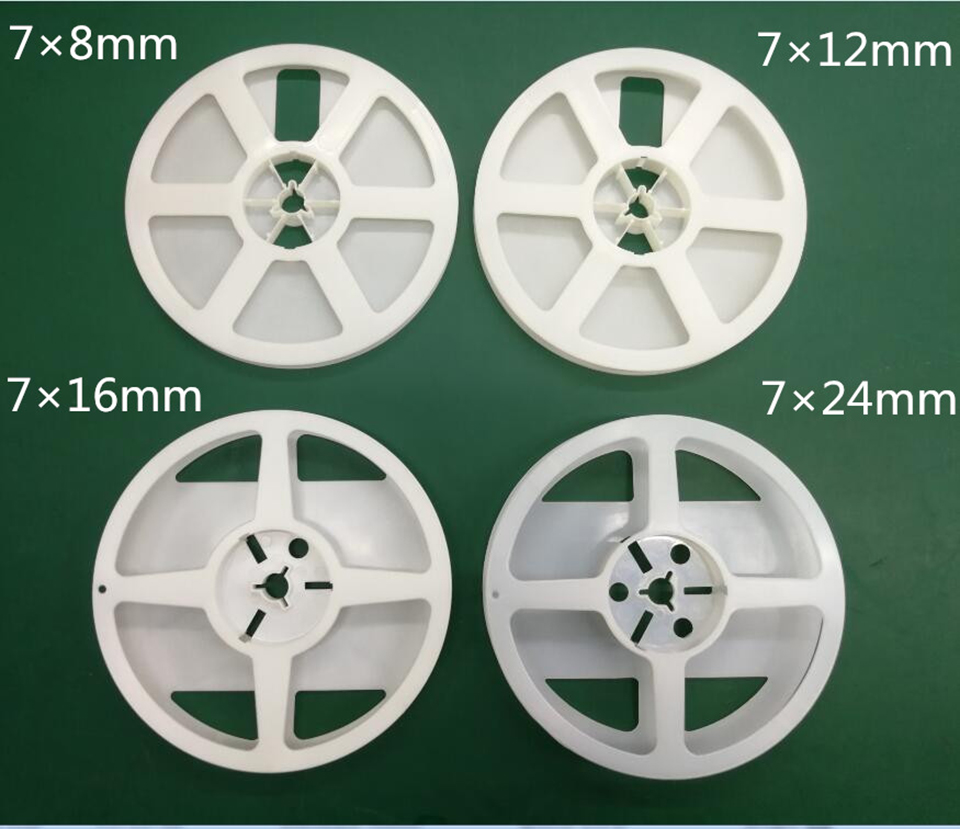
Compact and lightweight, 7-inch reels pair well with narrow tape widths such as 8 mm, 12 mm and 16 mm, commonly used for small passives, diodes and miniature ICs.
Because each reel carries a shorter length of carrier tape, it fits high-mix, low-volume environments really well. Teams building prototypes, running NPI or small pilot orders appreciate easier kitting and faster feeder changeover. It also helps avoid locking up large quantities of high-value components as leftover stock when a design changes or a trial ends.
The main downside shows up during high-volume runs. More tape per reel means fewer stops, so 7-inch reels require operators to swap reels much more often. More splices also introduce extra chances of feeding issues on high-speed pick-and-place equipment, and handling costs add up over time.
For most of our customers, 7-inch reels are the practical choice for samples, qualification builds and short runs where flexibility matters more than uninterrupted throughput.
13-inch Reels
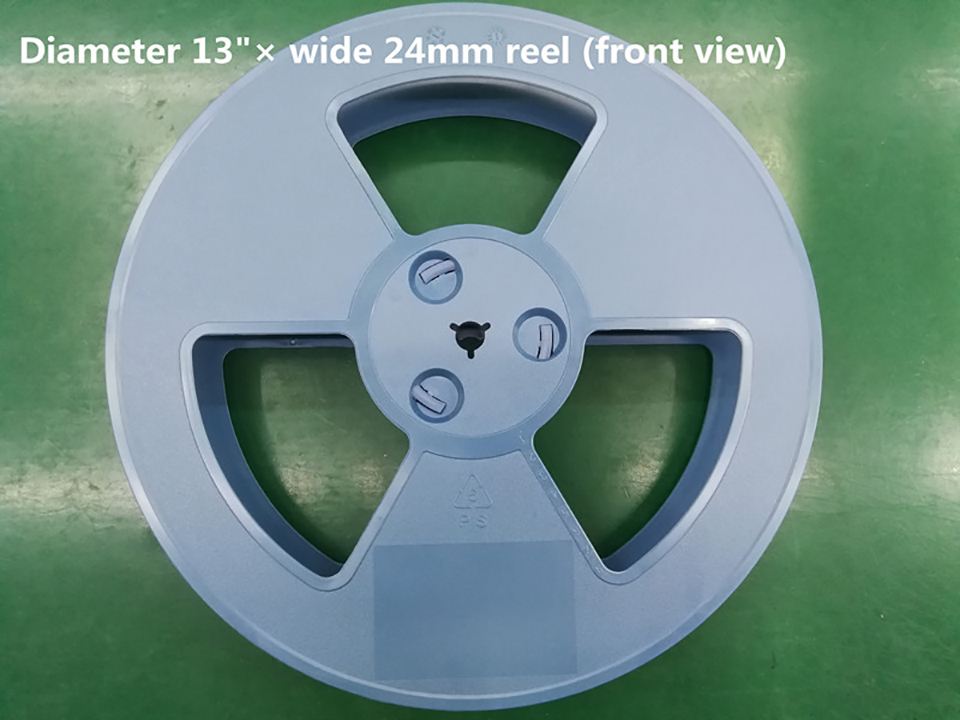
13-inch reels are the industry standard for stable mass production. For the same tape width, they hold roughly 3 to 4 times more material than a 7-inch reel, and support wider tape up to 44 mm for connectors, sensors and larger semiconductor components.
Fewer reel changes directly reduce unplanned downtime on the SMT line. Less splicing lowers feeding errors and cuts down on repetitive work for operators. Over long production campaigns, this also brings down the per-unit packaging and handling cost. Most modern feeders, automated storage and unmanned material systems work seamlessly with 13-inch reels.
That convenience comes with trade-offs. They take up more space on feeder racks and in warehouse storage. The larger capacity also means a higher minimum quantity, which can create excess inventory if your order volume is small. They are also heavier and take a little longer to load.
We usually recommend 13-inch reels for mature, long-running production jobs, especially automotive and industrial electronics with consistent demand.
How to pick the right one for your line
Choose 7-inch reels if you manage many different part numbers, change products often, build prototypes, or need to limit leftover stock of expensive parts.
Choose 13-inch reels if you have steady production volumes, want to reduce line stops, and run extended SMT builds.
Many of our customers do not stick to only one size. They start with 7-inch reels for sampling and validation, then switch over to 13-inch once the product moves into full mass production. This keeps the development phase flexible while keeping production cost-effective later.
There is no universal best option. The right reel size depends on your batch volume, product mix, feeder hardware and internal inventory rules. We offer ESD-compliant 7-inch and 13-inch reels, custom carrier tape cavities and matching cover tape to suit your project.
If you are not sure which format makes sense for your next build, reach out to our engineering team. We can walk through your production setup and give you straightforward advice.
Note: We recently helped an automotive customer switch from 7-inch to 13-inch reels after their NPI phase, cutting reel change downtime by around 30% on their main SMT line.
Post time: Nov-16-2026